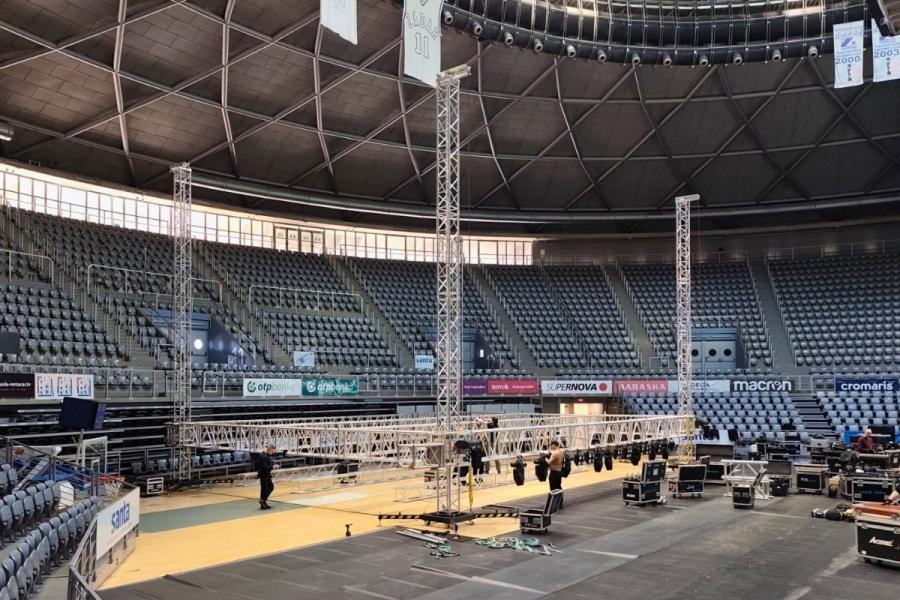
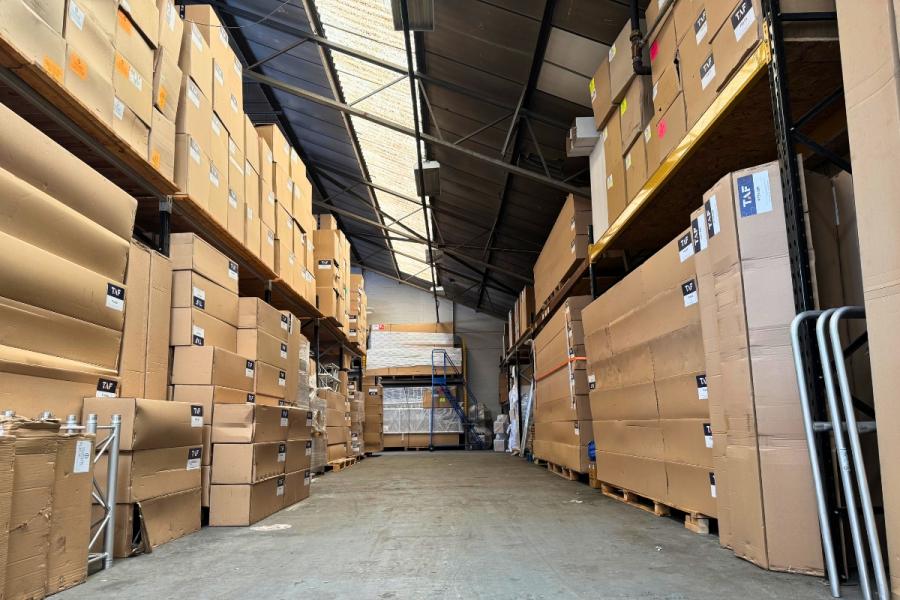
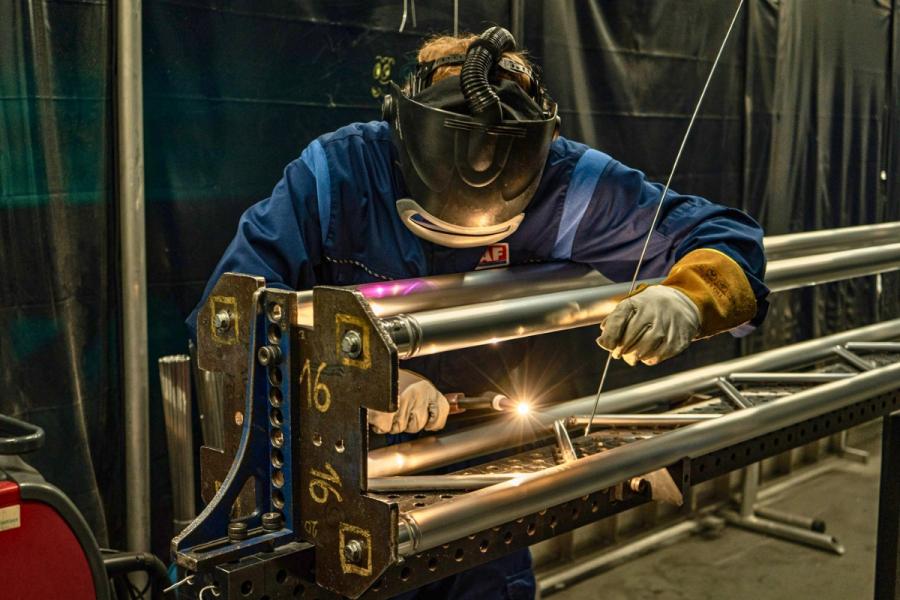
Aluminum trusses are built for demanding professional use. In the live events, exhibition, staging, broadcast and installation industries, they are assembled, loaded, transported, dismantled and stored again and again. This repeated use is one of the main advantages of a modular truss system, but it also means that every truss section quality and condition depends on proper handling throughout its entire life cycle.
A high-quality aluminum truss is not a disposable product. With correct storage, regular inspection and responsible maintenance, it can provide many years of reliable service. However, even the best-manufactured truss can be damaged by careless transport, incorrect stacking, unsuitable tools, aggressive environments or poor inspection routines. Small dents, worn connection points or corrosion marks can develop into serious safety concerns if they are ignored.
This article summarizes practical storage and maintenance recommendations for aluminum trusses, with the goal of helping rental companies, event professionals, installers and venue operators extend the service life of their truss inventory and prevent avoidable product damage.
Why truss care matters?
An aluminum truss is a structural component. It is designed to carry specific loads under defined conditions, and it must be used according to the manufacturer's instructions, applicable load tables and local regulations. Because trusses are often part of temporary structures above people, equipment or performers, maintenance is not only about appearance or asset value. It is mainly a safety responsibility.
Trusses can be exposed to many kinds of stress during their working life: bending forces during use, impact during loading and unloading, vibration both during use or in transport, moisture outdoors, dirt from venues, repeated assembling and dismantling, and sometimes contact with incompatible accessories or chemicals. Most damage is preventable when a clear care routine is followed.
Good truss care has four main benefits. First, it protects safety by ensuring that damaged products are identified before use and thus keeping both people and equipment safe. Second, it reduces replacement costs by preventing unnecessary wear and damage. Third, it keeps assembly faster and easier because connection points remain clean, aligned and complete. Finally, it supports professional presentation, especially for visible installations, exhibitions, retail environments and premium events.
Start with correct handling
The best maintenance begins before storage. Many truss problems are created during handling, transport or assembly. Aluminum is strong for its weight, but it can still be dented, scratched or deformed by impact.
Truss sections should be lifted, moved and positioned with care. Avoid dropping them from trucks, dragging them across concrete, throwing them into storage racks or using fork tines directly against main chords and braces. Even if a dent looks minor, deformation in a main tube or diagonal member can affect the truss section's structural behavior.
During assembly and dismantling, use suitable tools. Soft-face hammers made from plastic, copper or aluminum are preferred for connection work because they reduce the risk of damaging pins, connectors and tube surfaces. Steel hammers, excessive force or improvised tools can deform connection parts and make future assembly difficult.
Never force a connection that does not line up. If a truss section does not connect smoothly, stop and identify the cause. Possible reasons include dirt in the connector, a bent pin, a damaged connection end of the chord, incorrect product compatibility or misalignment caused by loading conditions. Forcing the joint may hide the real problem and create additional damage.
Inspect before every use
Every truss section should be visually inspected before use. This inspection should be carried out by a competent person who understands what damage looks like and when a truss should be removed from service.
A pre-use inspection should include the main chords, diagonal and vertical braces, welds, connection parts and the overall geometry of the truss. Check the main chords for dents, cracks, deep scratches, flattening, bends or signs of twisting. Look along the length of the truss to see whether the geometry is still straight and square. Pay close attention to the areas near connection points, because they receive repeated handling and load transfer.
Inspect diagonal and vertical braces for deformation, cracks at welds, missing material or impact damage. A bent brace is not only a cosmetic issue. Braces are part of the structural system and help transfer forces through the truss.
Check the welds visually. Look for cracks, unusual discoloration, separation, or signs that the product has been overloaded or impacted. Do not attempt to repair welded structural parts without manufacturer approval. Unauthorized welding, grinding or drilling can seriously compromise the truss and invalidate certification or warranty.
Inspect connection parts such as conical connectors, pins, spigots, bolts, fork ends or quick-lock components. They should be clean, complete, correctly seated and free from excessive wear. Pins should not be bent, mushroomed, cracked or heavily corroded. Safety clips, springs or locking elements should work properly and should never be replaced by unsuitable alternatives.
If there is any doubt about a truss section's condition, remove it from service and have it assessed by a qualified person. A simple rule is useful: uncertain truss should not be used above people.
Keep inspection records
For professional use, inspection should not rely only on memory. Each truss section should be identifiable, ideally with a serial number, barcode, RFID tag or inventory label. Records should show when the product was inspected, who inspected it, what was found and what action was taken.
For rental companies, documentation is especially valuable. It helps track product history across tours, dry hires and warehouse returns. If a section is repeatedly returned with damage, the record can help identify whether the problem is related to a particular transport method, client, accessory or handling practice.
Inspection frequency depends on the intensity of use, environment and local requirements. A truss used every weekend in touring conditions needs closer attention than a truss installed permanently in a controlled indoor venue. Outdoor use, movement during operation, harsh environments and visible impact history should all lead to more frequent inspection.
Clean trusses before storage
Trusses should be stored clean and dry. Dirt, dust, tape residue, mud, moisture, smoke fluid deposits and other contaminants can make inspection harder and may accelerate wear or corrosion in certain environments.
After use, remove adhesive tape, cable ties, stickers and residue where possible. Tape left on aluminum for long periods can harden, attract dirt and leave marks. Use cleaning methods that are appropriate for aluminum and for the surface finish of the product. Mild detergents and soft cloths are generally preferable to aggressive chemicals or abrasive tools.
Avoid strong alkaline cleaners, acids, caustic substances, chlorides and unknown solvents. These can attack aluminum surfaces or leave residues that promote corrosion. If a cleaning product is used, test it carefully and rinse or wipe away residues according to the product instructions.
For trusses used outdoors, near the sea, in humid environments or in venues with heavy atmospheric contamination, cleaning becomes more important. Salt, moisture and industrial pollutants can increase the risk of pitting or surface corrosion. After exposure to rain or salt air, allow the truss to dry completely before it is packed or stacked.
Store trusses in a dry, ventilated area
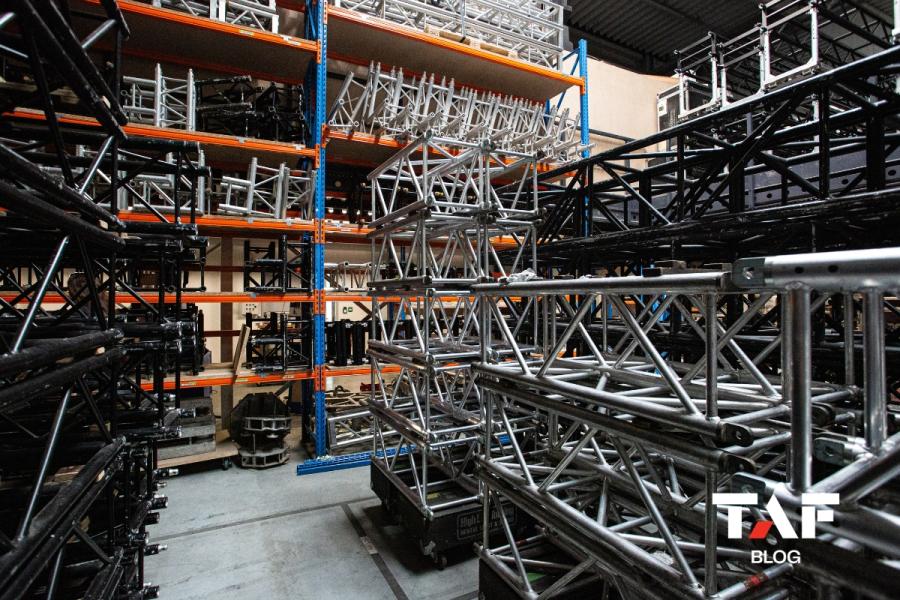
The ideal truss storage area is dry, ventilated, clean and protected from weather. Long-term exposure to water, condensation or aggressive air can reduce the quality of the aluminum surface and make steel accessories or connection parts corrode.
Do not store trusses directly on the ground. Use racks, pallets, stillages or storage frames that keep the truss off the floor and allow air circulation. Floors can transfer moisture, dirt and impact damage. Outdoor ground storage is especially risky because water can collect inside tubes, around connectors or under protective covers.
If trusses must be stored temporarily outside, cover them in a way that protects from rain but still allows ventilation. Fully sealed plastic wrapping can trap condensation, especially when temperatures change between day and night. Moisture trapped inside a cover may cause more problems than open-air exposure.
Keep trusses away from chemicals, fertilizers, cleaning agents, battery acids, cement dust, salt, pool chemicals and other aggressive materials. Aluminum is naturally corrosion-resistant because it forms a protective oxide layer, but that protection can be compromised by the wrong environment.
Stack correctly to prevent deformation
Incorrect stacking is one of the most common causes of preventable truss damage. Trusses should be stacked in a stable, supported and organized way. Use purpose-built racks or carts whenever possible.
Support truss sections along suitable load-bearing points and avoid point loads that press into chords or braces. Do not stack heavy items on top of trusses unless the storage system is designed for it. Avoid mixing incompatible sizes in unstable piles. A small truss underneath a heavier or larger truss can be damaged by concentrated pressure.
When storing multiple sections, align them carefully so that connectors, pins and end connectors are not carrying unintended loads. Use spacers or protective material where needed, but make sure the material does not trap moisture. Wood, rubber or plastic supports can help prevent metal-to-metal abrasion, but they should be clean and dry.
Storage should also allow safe access. If staff must climb over trusses or pull sections from the bottom of a pile, the system is not only inefficient but also unsafe. Good warehouse organization reduces both product damage and worker injury risk.
Protect connection systems
The connection system is one of the most important parts of any modular truss. Whether the system uses conical connectors, pins, forks, bolts or quick-lock elements, the joint must transfer forces correctly and allow repeatable assembly.
Keep connectors clean and free from grit, paint, tape, burrs and impact damage. Store pins, clips and small accessories in dedicated containers so they are not lost or mixed with unsuitable parts. Do not substitute non-original pins, bolts or clips unless the manufacturer confirms compatibility.
Connection parts should not be modified. Drilling extra holes, grinding a tight connector, hammering a bent pin back into shape or replacing certified hardware with a visually similar part can introduce serious risk. If a connector is worn or damaged, remove it from use and follow the manufacturer's replacement process.
It is also important to keep product families separate. Truss systems from different manufacturers, or even different lines from the same manufacturer, may look similar but have different geometry, connection dimensions, alloy specifications or load ratings. Mixing incompatible systems can create poor fit, hidden stress and unsafe load transfer.
Prevent galvanic corrosion
Galvanic corrosion can occur when aluminum is in electrical contact with a more noble metal, such as stainless steel, in the presence of an electrolyte such as water, salt water or conductive dirt. This is especially relevant for outdoor structures, coastal environments and long-term installations.
In normal indoor touring use, galvanic corrosion may not be a major issue, but it should still be considered where aluminum trusses are used with steel plates, stainless accessories, clamps, fasteners or support structures. The risk increases when moisture remains trapped between materials.
Prevention is based on three practical ideas: keep the assembly dry, avoid trapping moisture, and use suitable isolation where required. Non-conductive washers, protective pads, coatings or approved interface materials can help separate dissimilar metals. Drainage and ventilation are also important because galvanic corrosion needs an electrolyte to continue.
After wet events, do not pack damp trusses tightly into closed cases for long periods. Dry them first. This simple habit can prevent many surface problems and makes later inspection easier.
Avoid unauthorized modifications and repairs
A truss section is an engineered product. Its strength depends on geometry, material, welding quality, connection design and manufacturing control. Modifying it without approval can change the way it behaves under load.
Do not drill holes, weld brackets, grind tubes, cut braces, straighten bent parts with force, or attach permanent accessories unless the manufacturer or a qualified engineer approves the modification. Even a small hole in the wrong position can create a stress concentration. A welded repair can change material properties in the heat-affected zone.
Damaged trusses should be quarantined and labelled clearly so they cannot accidentally return to service. The next step should be inspection by a qualified person or consultation with the manufacturer. In some cases, the product may be repairable under controlled conditions. In other cases, it must be replaced.
A "looks good enough" approach is not acceptable for structural equipment. If the truss's integrity cannot be confirmed, it should not be used.
Transport is part of maintenance
Trusses often suffer more abuse in transport than during the actual event. Loading docks, trucks, forklifts and busy crews create many opportunities for damage.
Use suitable transport carts, dollies, or cases. Secure trusses so they cannot slide, bounce or collide during transport. Avoid direct contact with sharp steel edges, chains or unprotected forklift tines. When using straps, tighten them enough to secure the load but not so aggressively that they deform the truss.
Do not throw pins and connectors loose into the truck where they can damage truss surfaces or become lost. Keep accessories organized and matched to the correct system.
For touring, create a return-check routine. When trusses come back from a job, inspect them before they are stored with ready-to-use stock. This prevents damaged sections from being discovered only during the next load-out, when time pressure may lead to poor decisions.
Pay attention to outdoor and permanent installations
Outdoor use requires additional care. Wind, rain, temperature changes, dust, UV exposure and uneven ground conditions all increase the importance of correct planning and inspection. Temporary outdoor structures should always follow engineering documentation, ballast requirements, local regulations and weather action plans.
After outdoor use, inspect for water retention, dirt, corrosion marks, impact damage and connector wear. Clean and dry the truss before storage.
Permanent or semi-permanent installations also need scheduled inspection. A truss that is not moved often may still be affected by vibration, environmental contamination, suspended loads, accidental impacts or changes made by third parties. If motors, hoists, lights, screens or scenic elements are moved regularly on the same truss, the inspection routine should reflect that use.
Train the people who handle the product
The best storage system will fail if crews are not trained. Everyone who handles truss should understand that it is structural equipment, not just aluminum tubing. Warehouse staff, drivers, local crew and technicians should know how to move it, stack it, connect it, inspect it and report damage.
Training should include clear examples of unacceptable damage. Photos of dents, cracked welds, twisted geometry, worn connectors and missing safety clips can be useful. Staff should also know the company's process for taking the questionable products out of the inventory and installation circulation.
A strong safety culture based on regular checking processes prevents any possible failure and danger. That is much better than discovering a problem after the structure is built.
Practical checklist for longer truss life
1) Before use, inspect every section visually. Check chords, braces, welds, connectors, pins and overall geometry. Do not use a product if there is doubt about its condition.
2) During assembly, use suitable tools and correct connection parts. Never force misaligned joints and never mix incompatible systems.
3) After use, remove tape, dirt and moisture. Clean with aluminum-friendly methods and avoid aggressive chemicals.
4) Before storage, make sure the truss is dry. Store it off the ground in a ventilated area, protected from weather and chemicals.
5) During storage, use racks or supports that prevent deformation. Do not overload stacks or create point loads on chords and braces.
6) During transport, secure trusses against impact and movement. Use carts, stillages, cases or protective spacers where appropriate.
7) For long-term management, keep inspection records, identify each truss section and quarantine damaged products immediately.
Summary
Aluminum trusses are designed for professional, repeated use, but their service life depends heavily on how they are handled between projects. Proper storage and maintenance are not complicated. They are based on consistent habits: inspect before use, handle with care, clean and dry after use, store correctly, protect connection systems, avoid unauthorized modifications and keep good records.
For rental companies and event professionals, these habits protect both safety and investment. A well-maintained truss inventory is easier to assemble, safer to operate, more professional in appearance and less expensive to manage over time.
TAF aluminum trusses are manufactured for demanding applications in the event and installation industries. To get the best performance and longest service life from any truss system, always follow the official product documentation, respect load tables, use trained personnel and remove questionable components from service until their condition is confirmed.